15 min
Uluru Helicopter Flight - 15 Minutes
- Private experience
- Personal attention
- Premium amenities
- Free cancellation
Uluru Helicopter Flights — Scenic Tours Over the Red Centre
Above the sacred monolith and Kata Tjuta domes, where the desert opens in rust and shadow.
Compare fares, pick the fit — all bookings are mobile-voucher and eligible for free cancellation where shown.
15 min
1 hr 30 min
2 hr
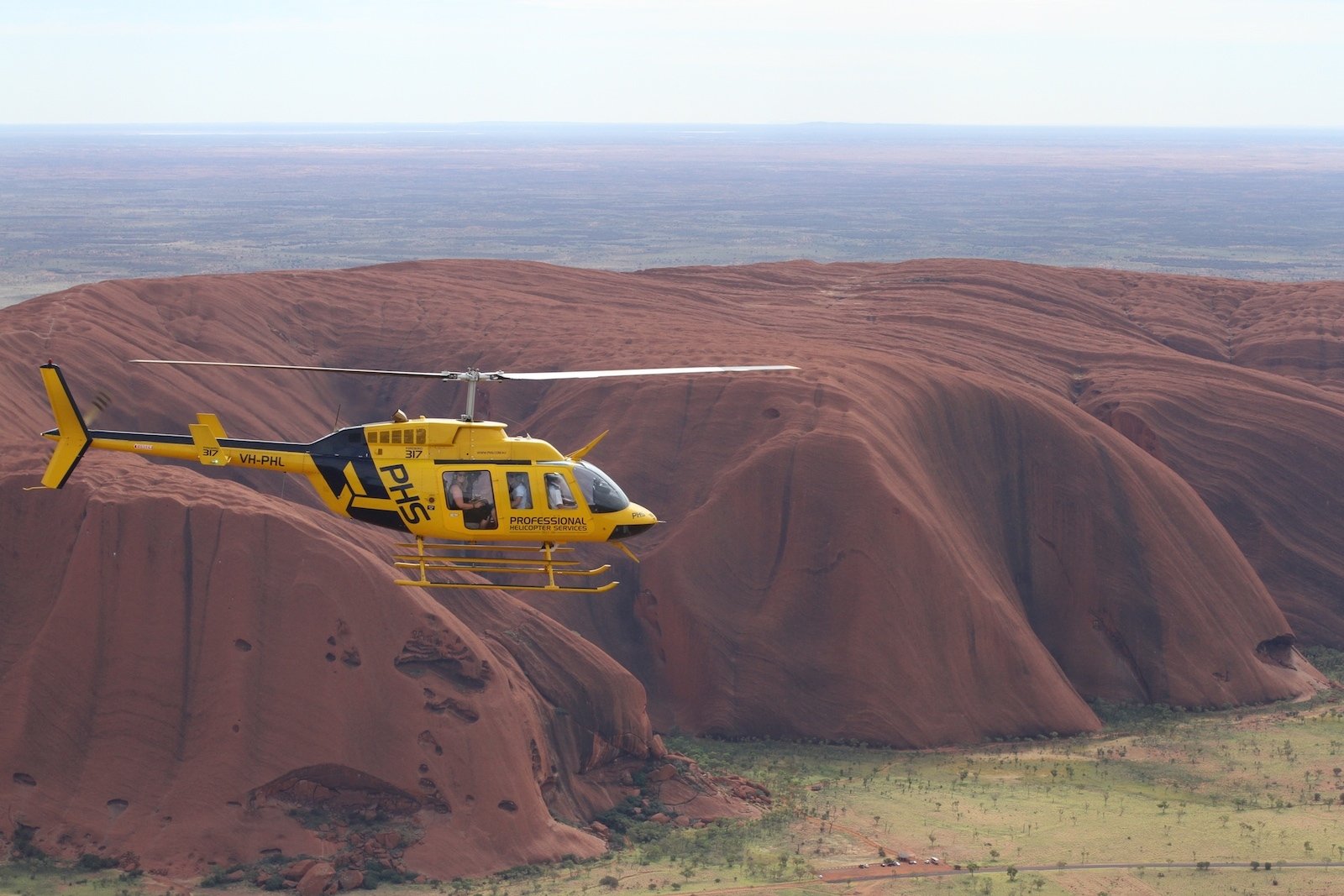
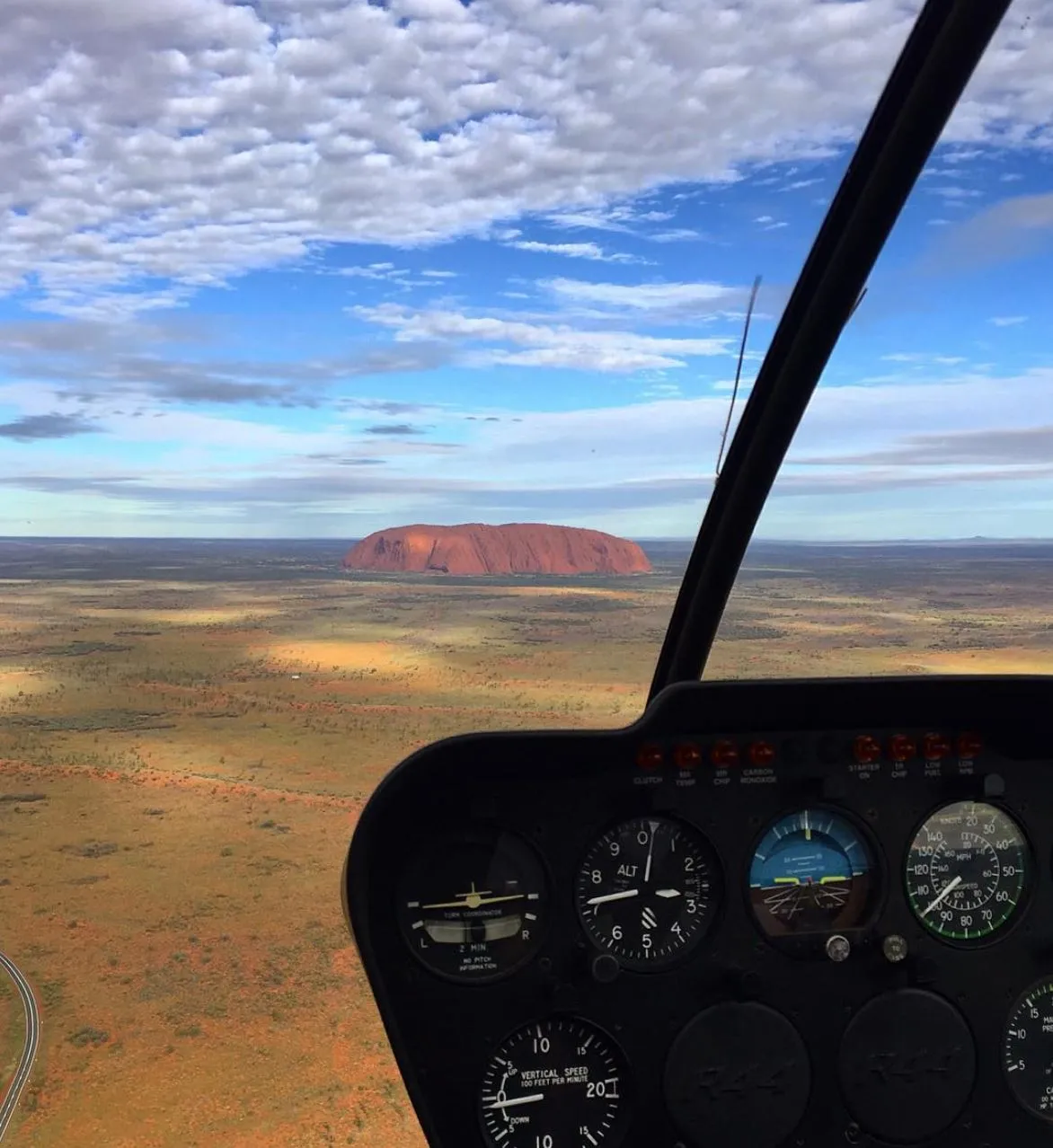
Choosing between uluru helicopter flights allows you to witness the vastness of the Red Centre from above, providing a unique aerial perspective of the sacred monolith. These scenic tours offer different flight durations to help you capture iconic landmarks like Kata Tjuta and the surrounding desert landscape.
| 15-Minute Express Uluru Focused |
Top pick 25-Minute Explorer Uluru & Kata Tjuta |
36-Minute Grand View Extended Aerial Tour | |
|---|---|---|---|
| Flight Duration | 15 minutes | 25 minutes | 36 minutes |
| Landmarks Included | Uluru | Uluru and Kata Tjuta | Uluru and Kata Tjuta |
| Aerial Perspective | Yes | Yes | Yes |
| Pilot Commentary | Included | Included | Included |
| Transfer Included | Return transfers | Return transfers | Return transfers |
| Best for | Time-limited visitors | Most first-time visitors | Comprehensive photography enthusiasts |
| See tickets & prices |
Verdict: For the best balance of value and scenery, most first-time visitors should select the 25-minute explorer option for their uluru helicopter flights tickets.
Worth it for the aerial perspective
Uluru helicopter flights deliver a view impossible from ground level: the true scale of the monolith, the vivid contrast between red rock and surrounding desert, and the domed formations of Kata Tjuta stretching west. The 15-minute flight hovers close enough to register texture and shadow, while the extended Uluru, Kata Tjuta & Lake Amadeus route adds the white expanse of the salt pan and deeper coverage of the Valley of the Winds. Prices start around 150–200 AUD for the short loop and climb to 400+ AUD for the extended tour, making this the steepest single expense after accommodation. The value proposition hinges on whether seeing Uluru from above—where its isolation and geology become legible—justifies the cost. For photographers and first-time visitors who want the defining aerial shot, helicopter tours are the only practical option. Budget travelers can skip it and still experience the base walk and sunrise viewing from Talinguru Nyakunytjaku without compromising the core visit.
Bottom line: If the aerial perspective matters to you and budget allows, the flight delivers a view you cannot replicate from the ground.
Both options provide a unique bird's-eye view of the Red Centre, though many travelers find the helicopter's maneuverability and open-door options provide a more thrilling uluru helicopter flights tour.
|
Top pick Helicopter Flight |
Fixed-Wing Flight | |
|---|---|---|
| Primary view | Sandstone monolith and domes | Wide-area regional landscape |
| Flexibility | High maneuverability near sites | Fixed flight paths |
| Vibration | Higher due to rotors | Lower, smoother cruise |
| Noise | Louder internal cabin | Quieter cabin environment |
| Capacity | Up to 3 passengers | Up to 7-9 passengers |
| Price (est.) | Higher entry cost | Lower cost per seat |
| Best suited for | Close-up aerial photography | Expansive outback sightseeing |
| Booking | Advance reservation required | Advance reservation required |
| See tickets & prices |
Verdict: Choose a helicopter if you prioritize proximity and photography for your uluru helicopter flights tickets, while a fixed-wing plane is often more economical for longer regional air safaris.
Hand-picked experiences loved by thousands of travelers
2.5 hours
Free Cancellation
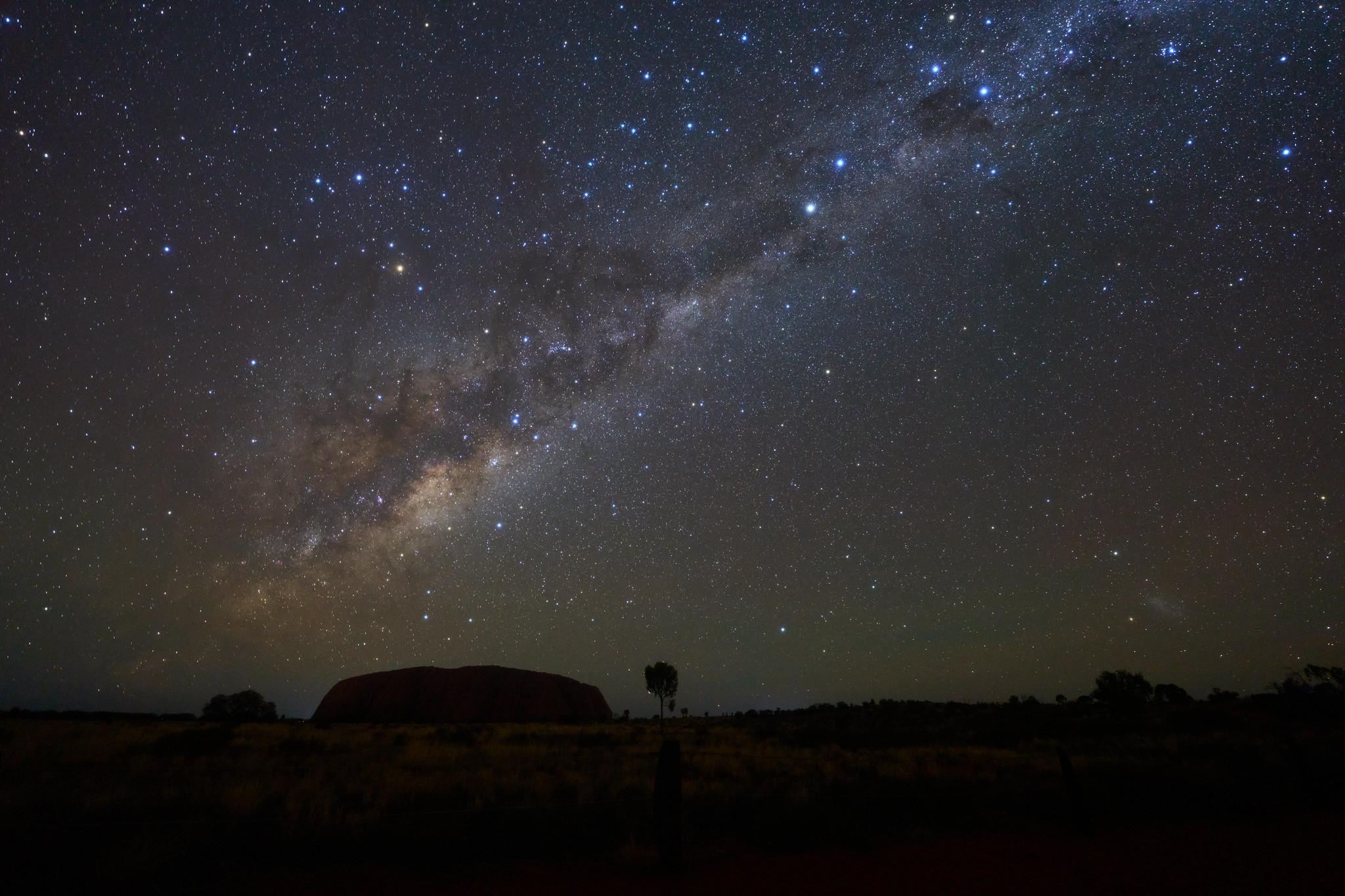
Explore the outback night sky through powerful telescopes with expert guides at a dark-sky location near Uluru.
5 hours
Free Cancellation
Watch dawn illuminate the Red Centre, then venture into ancient domes and a hidden desert gorge
7 hours
Free Cancellation
Seven-hour journey to Australia's red heart with guided walks, cultural insights, and sunset drinks
3 hours 31 minutes
Free Cancellation
Watch the Rock transform at dusk with wine and cheese, then feast under the outback stars
3 days
Free Cancellation
Trek through red desert landscapes, witness ancient rock art, and sleep under Outback stars
3 days
Free Cancellation
Three-day camping expedition through Australia's outback icons with sunrise at Uluru and rim hikes
1, 2 or 3 days
Free Cancellation
Explore Australia's sacred red heart at your own rhythm with unlimited daily transfers and flexible scheduling
Flexible self-guided experience
Free Cancellation
Explore Uluru and Kata Tjuta at your own pace with 100+ audio stories and GPS-triggered insights
Confirm weight and safety briefing
Walk to aircraft with pilot assistance
Aerial tour of the park landmarks
Post-flight viewing and photo review
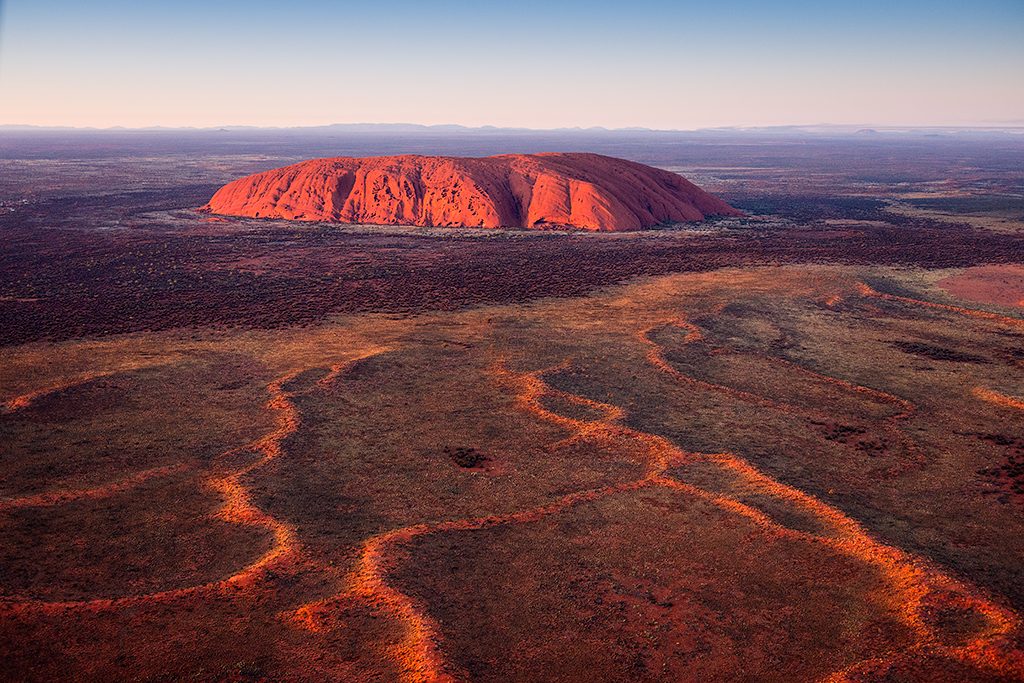
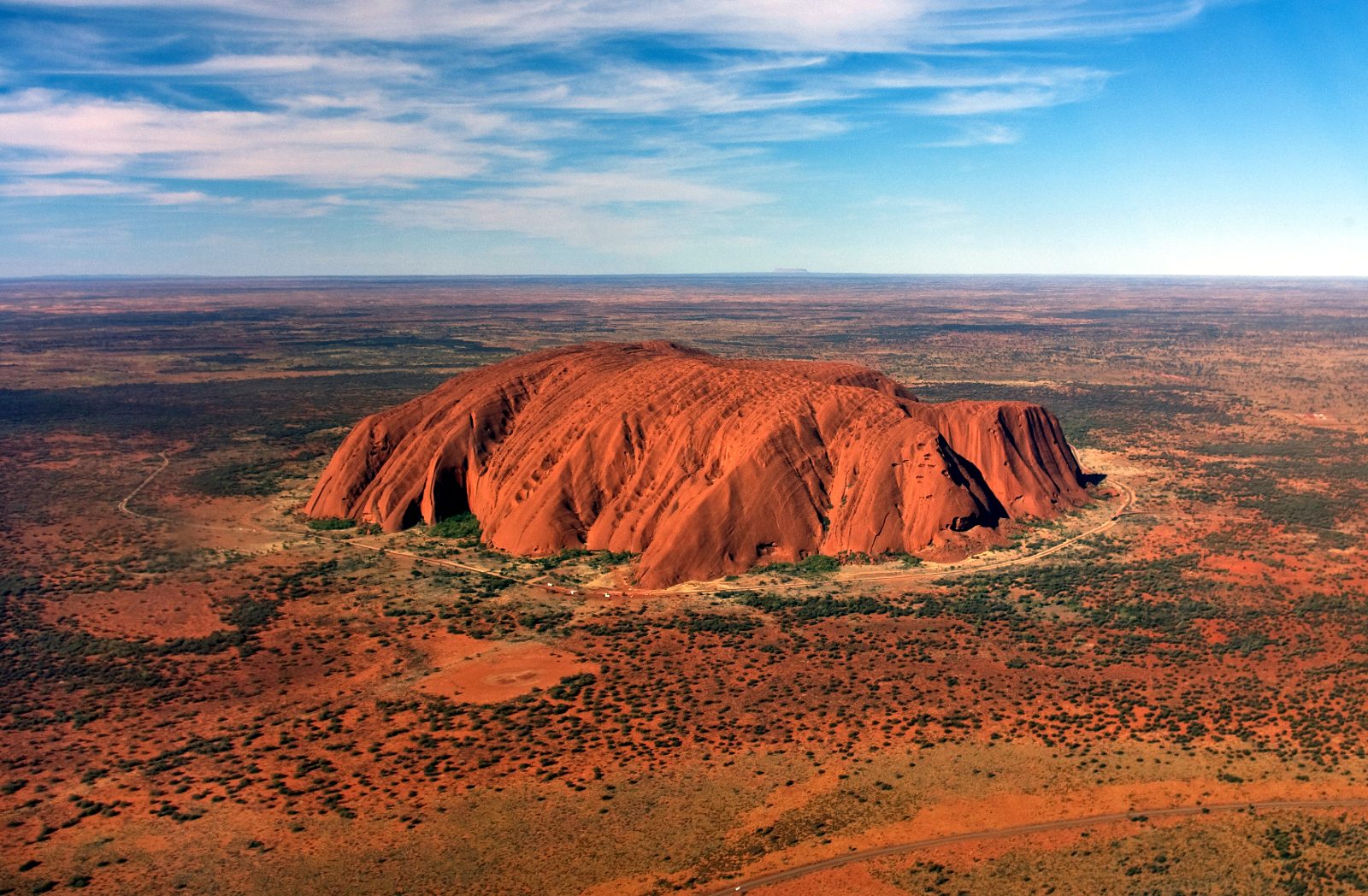
This iconic sandstone monolith rises 348 meters above the desert floor and is the primary focus of most scenic flight paths
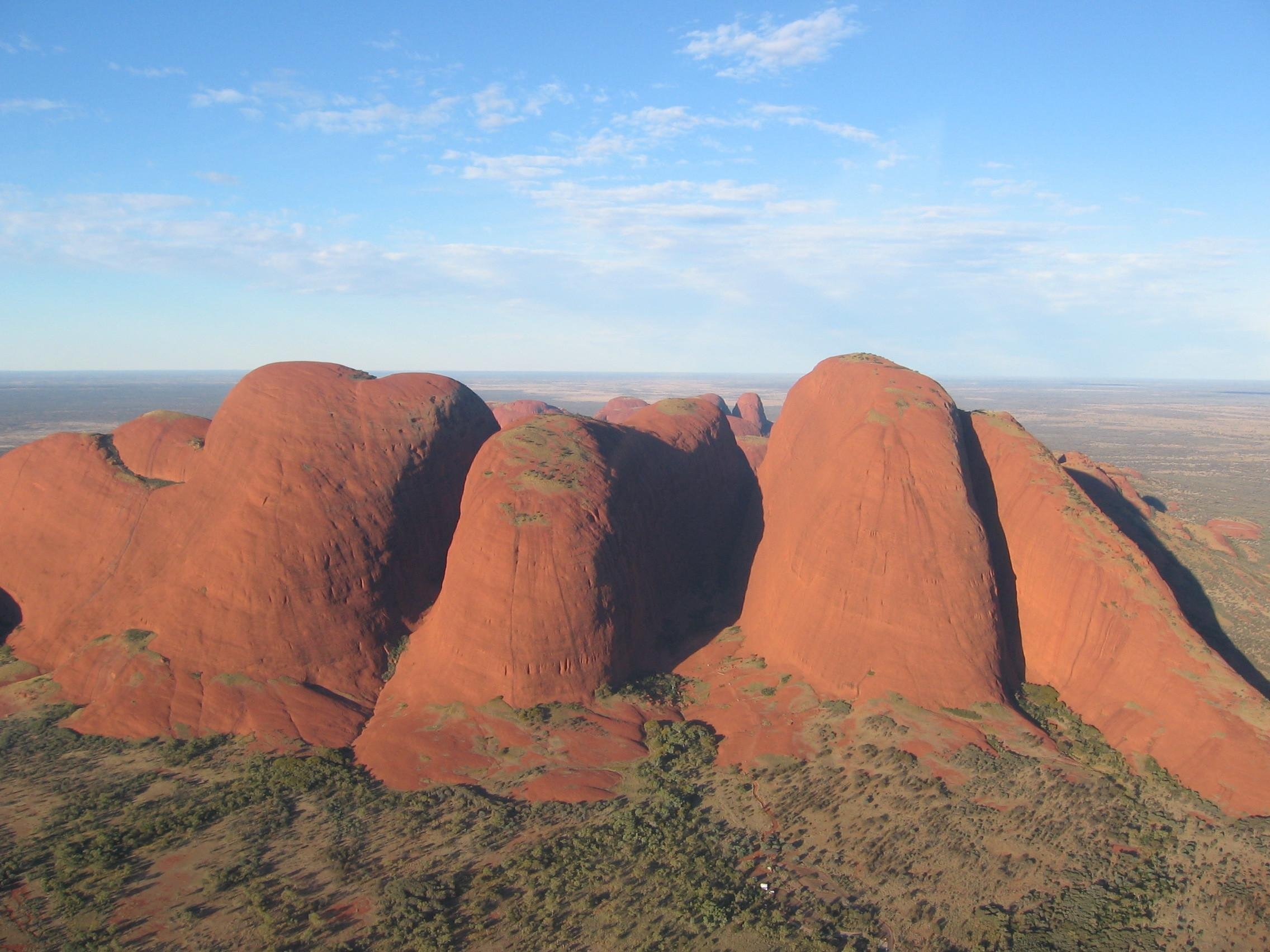
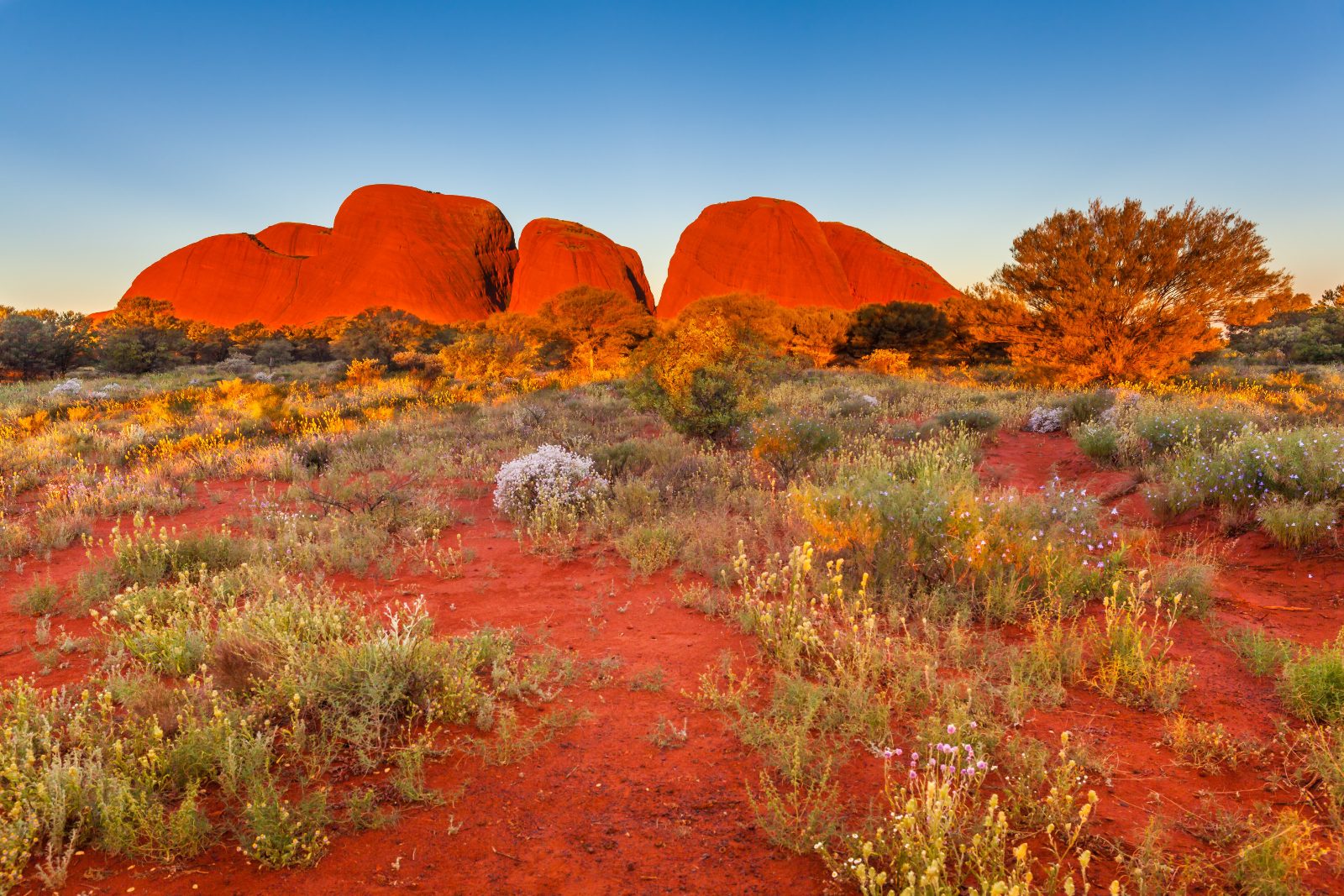
Comprising 36 distinct domes, this rock formation creates a dramatic landscape that is best viewed from the air
This network of trails and gorges between the domes is spectacular when seen from above in a helicopter
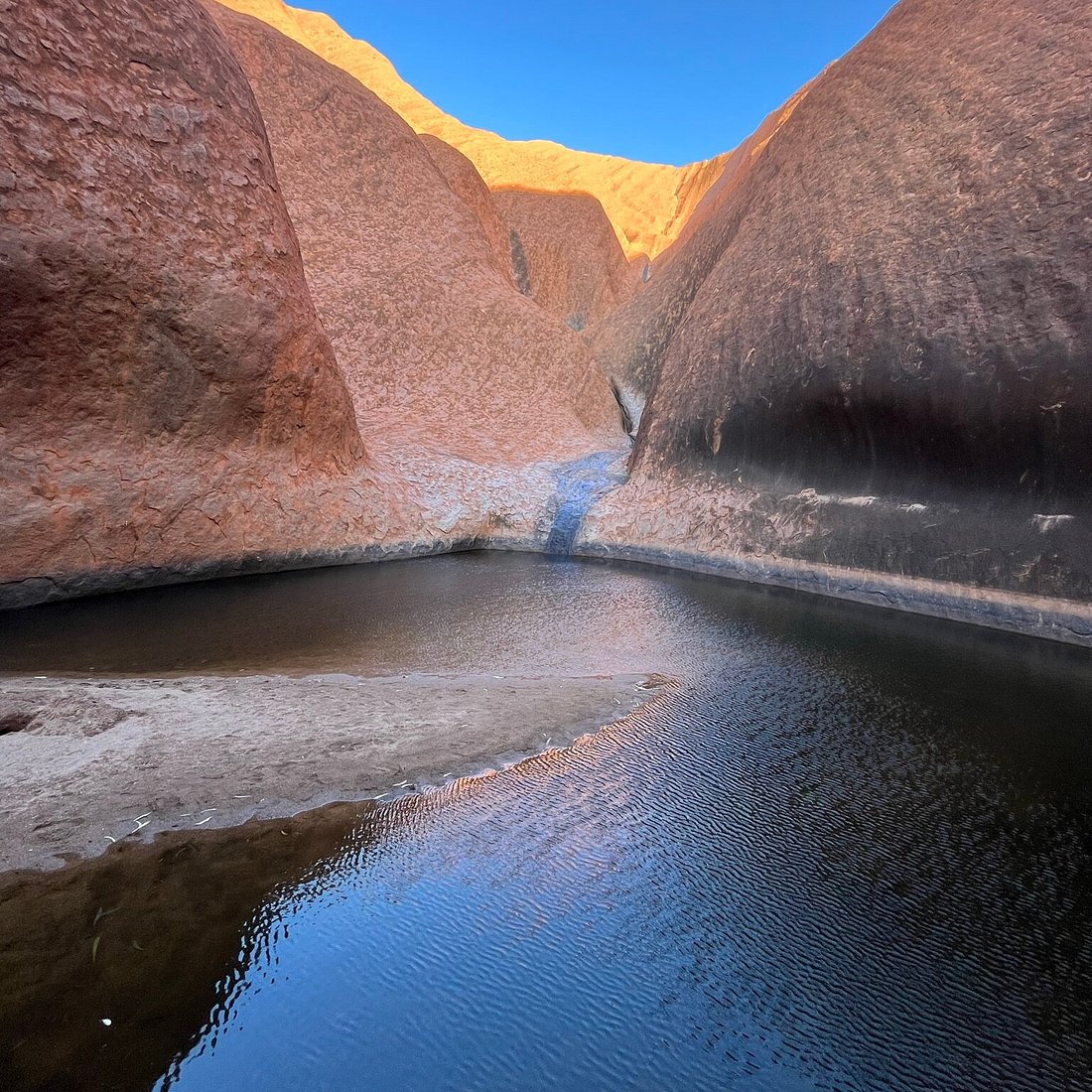
The diverse texture of the monolith base, including caves and waterholes, is visible from lower-altitude flight segments
You board before dawn at Yulara helipad, the desert air still cool, the horizon edged in pale orange. The helicopter lifts vertically, and within seconds the resort township shrinks to a grid of lights below.
You bank south, and Uluru emerges from the darkness ahead — not red yet, but charcoal grey against the lightening sky. The pilot maintains 500 feet as you circle clockwise, and the monolith's southern face catches the first direct sunlight: ochre bleeding into rust, the vertical striations suddenly visible as deep grooves carved by millennia of runoff.
From above, the rock's oval footprint becomes clear — 3.6 kilometres long, 1.9 kilometres wide — and you notice features invisible from the ground: shallow depressions that hold rainwater for weeks, darker patches where mineral seepage stains the sandstone, the precise line where vegetation stops at the rock's base. The helicopter swings west toward Kata Tjuta, and the landscape flattens into spinifex and mulga scrub, rust-red soil punctuated by ghost gums. The 36 domes of Kata Tjuta rise abruptly, their rounded summits clustered tight, shadows pooling in the valleys between them. On longer flights you continue northwest over Lake Amadeus, a salt pan stretching white to the horizon, its surface cracked into geometric polygons. The return leg brings you back over Uluru from the north, the rock now fully lit, crimson deepening as the sun climbs higher.
All the details about your upcoming adventure in one place
The Pitjantjatjara and Yankunytjatjara peoples called it Uluru for tens of thousands of years before European surveyors renamed the 348-metre sandstone monolith Ayers Rock in 1873.
Rising abruptly from the desert plain 335 kilometres southwest of Alice Springs, Uluru is a single arkose slab — feldspar-rich sediment compressed over 550 million years — whose iron oxide content oxidises into the red that dominates the Australian interior. The rock's surface, creased with vertical striations and shallow caves, changes hue throughout the day: ochre at dawn, burnt sienna at midday, crimson at dusk. In 1985 the Commonwealth government returned title to the Anangu traditional owners, who lease the land back to Parks Australia under a joint management arrangement that closed the climb in 2019.
Uluru-Kata Tjuta National Park, dual World Heritage listed since 1994, encompasses 1,326 square kilometres and includes Kata Tjuta — 36 domed rock formations 30 kilometres west of Uluru, the tallest rising 546 metres above the plain. The park's cultural significance extends beyond geology: Uluru's caves hold Anangu rock art dating back centuries, and the site remains central to Tjukurpa, the traditional law and creation stories that govern Anangu life. The conservation fee of 38 AUD supports preservation work and cultural programs administered jointly by Anangu elders and park rangers.
Helicopter operations within the park follow strict altitude and flight-path regulations designed to minimise disturbance to culturally sensitive areas. The scenic flight infrastructure operates from Ayers Rock Airport and designated helipads near Yulara, the resort township 20 kilometres north of Uluru. Standard flight durations range from 15 minutes — a direct circuit of Uluru — to extended sorties that include Kata Tjuta, Lake Amadeus, and the surrounding desert landscape. Morning departures between 05:00 and 09:00 offer optimal photographic conditions: cooler air reduces thermal turbulence, and low-angle sunlight accentuates the monolith's surface texture. The summer heat (December through February) can exceed 40°C by midday, making early flights both more comfortable and visually superior.
Aviation access to Uluru has evolved significantly since the first tourist flights in the 1950s. Modern helicopter tours operate with noise-reduction technology and maintain minimum altitudes of 500 feet over Uluru itself, a regulation introduced in 2002 after consultation with Anangu representatives. The flights provide perspectives impossible from ground level: the full 9.4-kilometre circumference of Uluru becomes comprehensible only from above, and the spatial relationship between Uluru and Kata Tjuta — two geologically distinct formations separated by flat mulga scrubland — reveals the broader landscape architecture of the Red Centre.

The full 9.4-kilometre circumference of Uluru becomes comprehensible only from above.
Wear comfortable clothing and closed-toe footwear. Hats and sunglasses are recommended for comfort during Uluru helicopter flights.
Large bags are generally prohibited inside the aircraft for weight and balance safety. Secure storage is available at most departure points for uluru helicopter flights.
Photography is permitted and encouraged during your uluru helicopter flights tour. Please ensure your camera strap is secure and avoid using flash inside the cockpit.
Children must be accompanied by an adult. Infants may be required to sit on a guardian's lap depending on the aircraft type and safety regulations.
Assistance is required for boarding as most helicopters have high steps. Contact the operator in advance regarding specific mobility needs for uluru helicopter flights.
Consumption of food and drinks is not permitted during the flight. Bottled water is allowed before boarding for Uluru-Kata Tjuta National Park excursions.
Opening Hours
05:00–21:00
Address
Uluru-Kata Tjuta National Park, Lasseter Highway, Uluru NT 0872, Australia
Entry
38 AUD (3-day pass for adults 18 and over; conservation fee per person.)
Best Arrival
05:00–09:00
Storage
Limited storage at helipad facilities
Navigation
Follow signage for Uluru Airport or designated helipads
Car · Varies · Free parking at helipads
Follow Lasseter Highway directly to the park entry gate.
Shuttle · Varies · Check with your hotel concierge
Resort shuttles often provide transit to the airport/helipad.
Flights are subject to weather conditions and may be cancelled for safety. Refunds or rescheduling are provided for operator-cancelled flights per standard terms.
Recommended time
2-3 hours
To fully experience uluru helicopter flights, allocate time for transit to the launch site and safety briefings. Best arrival window: 05:00–09:00 — Early morning offers cooler temperatures and optimal light for aerial photography. Booking uluru helicopter flights tours early avoids mid-day heat, while securing your uluru helicopter flights tickets in advance ensures priority for these desert landmark perspectives. Choosing an uluru helicopter flights tour during quieter segments helps manage overall logistics within the park.
Crowd levels through the day
Weather · crowds · average price — dots go green to amber to red as each metric rises.
Mild temperatures and clear skies are ideal for aerial viewing.
Cooler mornings offer stable air conditions for consistent flight schedules.
Cool, dry weather provides excellent long-range visibility for park photography.
Early mornings are essential to avoid extreme midday heat before potential flight suspensions.
Operators require accurate passenger weights for flight balance and safety protocols. Provide these honestly during your booking process.
Helicopter operations are weather-dependent and subject to daily changes. Confirm your booking status on the morning of your flight.
Request a window seat if available for your uluru helicopter flights. Avoid wearing white clothes to minimize reflections in your aerial photos.
The desert environment is extremely arid. Drink plenty of water before and after your scenic flight.
Flights are popular during peak seasons. Book your uluru helicopter flights tickets several weeks in advance to secure a preferred time slot.
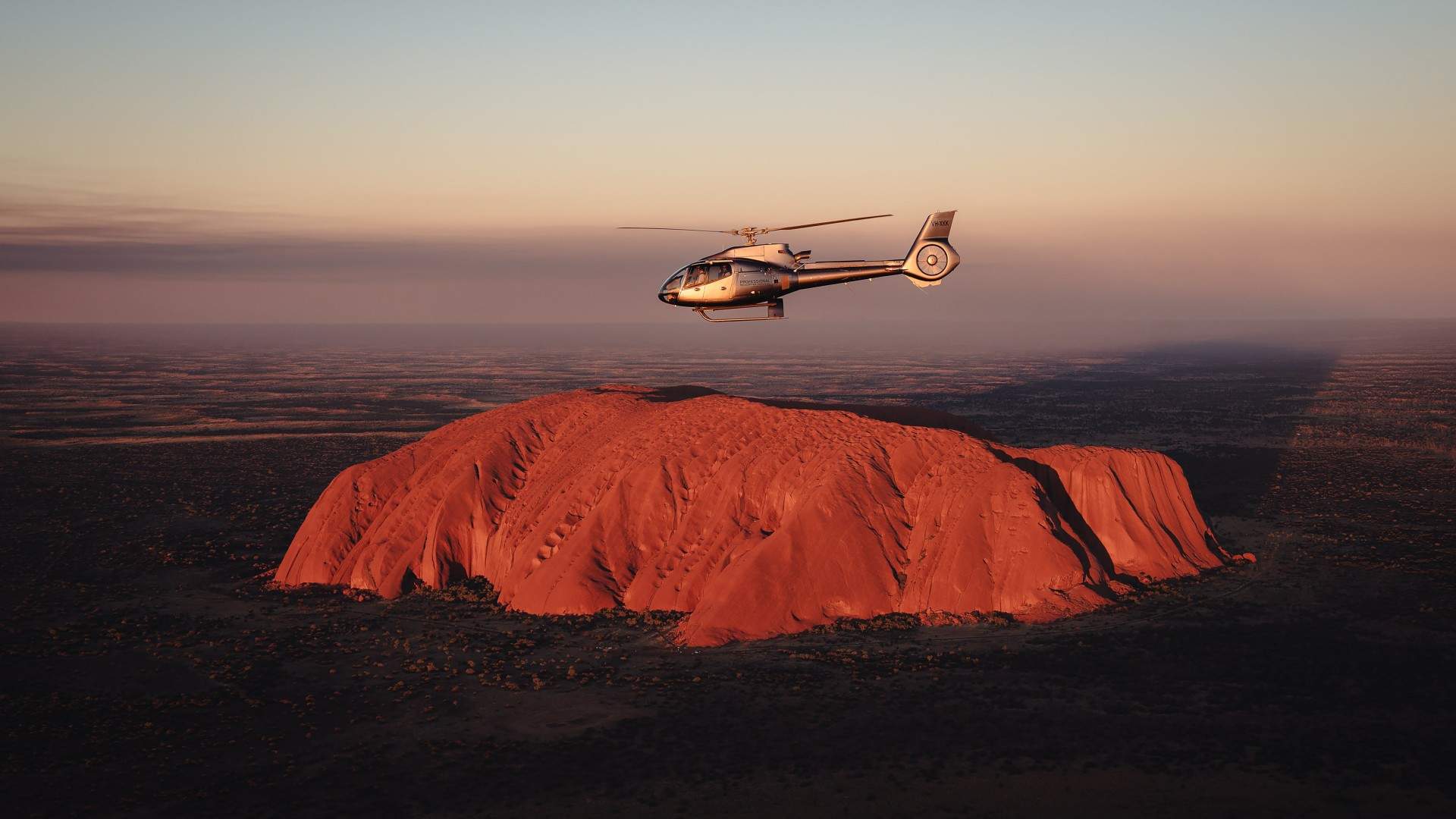
Commercial helicopter operations over Uluru began in 1977, when the Northern Territory government granted the first aerial tour permits to showcase the monolith from angles inaccessible by ground. Early flights departed from Yulara airstrip in Bell 206 JetRangers, carrying four passengers on 15-minute circuits that traced the rock's circumference at 500 feet. By 1981, three operators competed for the route, and the park recorded 12,000 scenic flight passengers annually. The sector expanded rapidly through the mid-1980s as international tourism surged, but in 1985 the Uluru-Kata Tjuta National Park handback to the Anangu traditional owners introduced new consultation requirements for low-altitude overflights near sacred sites. In 1991, the park board imposed a 1,650-foot minimum altitude over the rock itself and restricted flight paths to avoid ceremonial areas, cutting profits for some operators. A 1995 near-collision between two helicopters prompted mandatory separation protocols and radio coordination. Uluru helicopter flights tours consolidated into fewer hands by 2000, when stricter environmental audits tied permits to noise-abatement technology and cultural-awareness training. The 2010s brought GPS-enforced no-fly zones and seasonal restrictions during ceremonial periods, negotiated directly with Anangu elders. After the 2019 climb closure, aerial demand shifted toward Kata Tjuta routes and sunrise departures that showcase the rock's colour shifts without ground crowds. Today's uluru helicopter flights operate under joint management plans that balance tourism revenue with cultural protocol. Modern EC130 helicopters use Fenestron tail rotors to halve noise, and pilots receive annual briefings on restricted zones. The industry remains stable at roughly 18,000 passengers per year, with fixed flight corridors, mandatory altitude floors, and sunset tour tickets priced to fund park conservation programs.
First commercial helicopter permits granted for scenic flights over Uluru from Yulara airstrip.
Park handback to Anangu traditional owners introduces consultation requirements for low-altitude overflights.
Park board mandates 1,650-foot minimum altitude over the rock and restricts paths near ceremonial sites.
Near-collision between two helicopters leads to mandatory separation protocols and radio coordination rules.
GPS-enforced no-fly zones and seasonal restrictions negotiated with Anangu elders take effect.
Climb closure redirects aerial tourism demand toward Kata Tjuta routes and sunrise photography flights.
This perspective captures the sheer rock domes of Kata Tjuta from above during uluru helicopter flights. Position your camera to frame the deep valleys between the monoliths for scale.
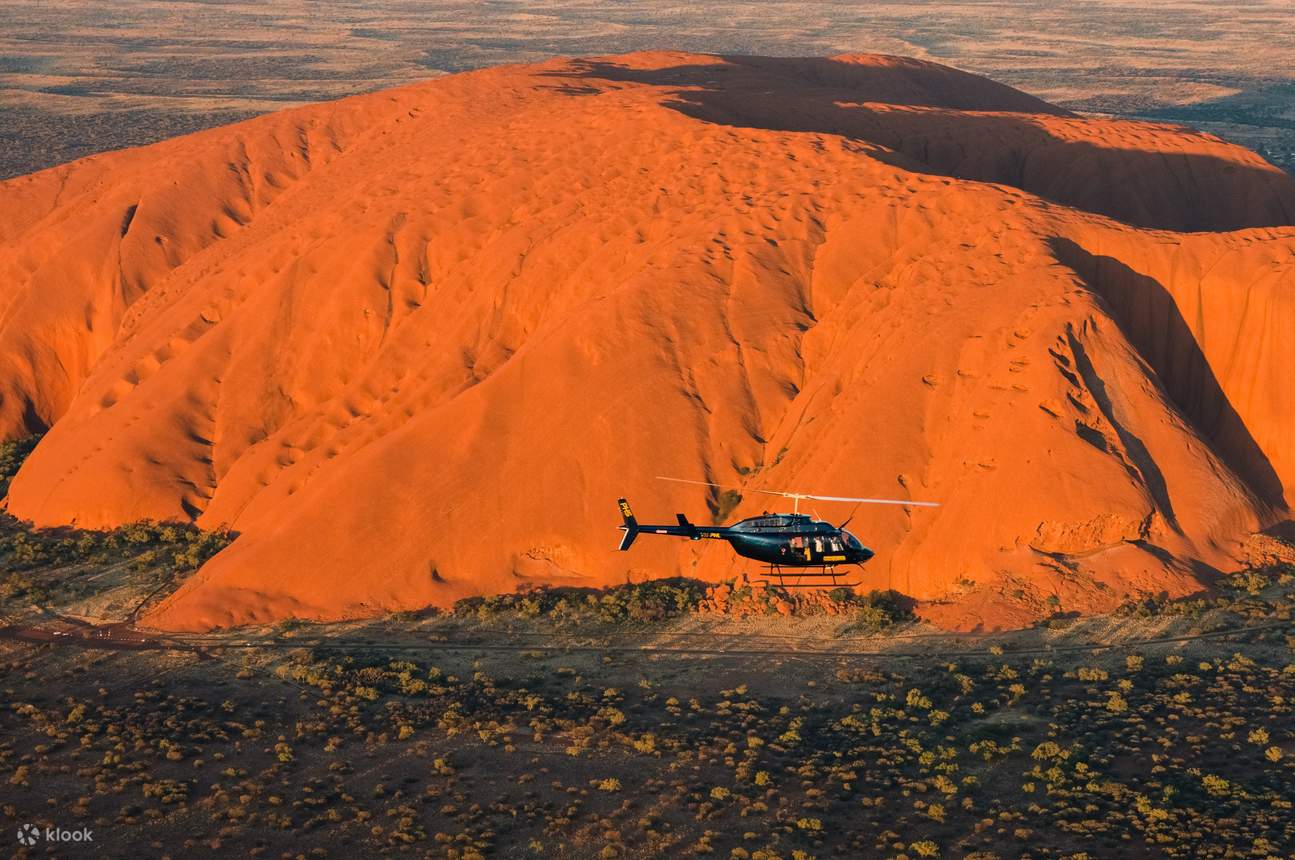
This angle highlights the geological textures and unique sandstone formations at the top of the monolith. These uluru helicopter flights tours provide access to views of the base walk paths below.
Capture the contrast between the vibrant red earth and the surrounding desert scrub while circling the landmark. Passengers on these uluru helicopter flights tickets often use a fast shutter speed to account for aerial movement.
A rare aerial look at the hidden water source located at the base of the rock. This uluru helicopter flights tour angle requires patience as the craft banks to provide a clear downward gaze.
Experiencing uluru helicopter flights provides a unique perspective of the landscape that keeps children engaged without the need for long hikes. These aerial tours offer a comfortable way to view the vast desert terrain while minimizing the physical exertion required for young travelers.
Strollers cannot be brought onto the aircraft, so ensure you have a lightweight carrier for infants or toddlers during your uluru helicopter flights tours. Parking areas are available at the base of the park, though aircraft boarding requires walking across tarmac surfaces
Children of all ages are welcome on these aerial adventures, provided they meet individual operator seating requirements. Many families find that elementary-aged children appreciate the bird's-eye view of the iconic sandstone formations the most during their uluru helicopter flights tour
The national park provides essential amenities, including restrooms and baby-change stations, near the main hub areas. Please note that there are no specialized nursing facilities directly at the remote helipad launch sites
The best arrival window for your party is 05:00–09:00 to ensure a smoother experience with younger children. Booking your uluru helicopter flights tickets early in the day helps avoid the heat and potential afternoon wind gusts that can affect flight paths
The park entrance fee is 38 AUD for a 3-day pass for adults 18 and over, which covers conservation costs per person. Please ensure you have your passes and documentation ready before heading to the helipad at Uluru-Kata Tjuta National Park, Lasseter Highway, Uluru NT 0872, Australia.
Dining options are concentrated at the nearby Ayers Rock Resort, as visitors preparing for uluru helicopter flights will find limited facilities within the national park boundaries. It is recommended to plan your meals before heading to the Lasseter Highway entrance to ensure you are fueled for your aerial photography session.
Located at Desert Gardens Hotel, this venue features Australian native ingredients and grilled meats. It is a popular choice for dinner after securing your uluru helicopter flights tours.
Found at Desert Gardens, this restaurant offers extensive breakfast and dinner buffets. Booking ahead is advised for those holding uluru helicopter flights tickets.
A casual spot perfect for a quick coffee or light lunch before your uluru helicopter flights tour. The venue focuses on training local hospitality staff and provides efficient service.
Everything you need to know for your journey
Operations run daily from 05:00–21:00 within the Uluru-Kata Tjuta National Park region.
Yes, all visitors must pay a 38 AUD conservation fee per person for park access.
Yes, for safety reasons, passengers must provide accurate weights, as there are strict limits for aircraft balance.
Cameras are encouraged for your uluru helicopter flights tour, though straps must be secure.
The best arrival window is 05:00–09:00 for optimal lighting and cooler temperatures.
Helicopter boarding requires navigating small steps; advise the team of specific mobility needs before booking.
Cancellations due to weather receive refunds or rebooking; check your specific uluru helicopter flights tickets policy.
Children are welcome but must be accompanied by an adult, with specific seating policies per aircraft safety rules.
Yes, many visitors combine their scenic flight with a ground tour of the nearby Uluru or Kata Tjuta monuments.
A massive sandstone monolith sacred to the Anangu people. Aerial views provide perspective on its scale and deep red hue.
A group of large, ancient rock formations consisting of 36 domes. These are best appreciated during long-duration flight packages.
A quiet site at the base of the monolith with rock art. Visible from the air during specific flight paths.
A dramatic landscape located within the Kata Tjuta site. Aerial tours offer a bird's-eye view of the rugged terrain.
Resort accommodation with views of the park surroundings.
Self-contained units suitable for families near the park entrance.
Standard lodge rooms catering to adventure travelers.
Join thousands of happy travelers who have discovered this incredible experience
Book Your Experience Now