

Quick answer
Commercial helicopters cannot fly directly over Uluru itself. All licensed tours follow approved flight corridors that circle the monolith at a prescribed distance, maintaining altitude and lateral separation mandated by Parks Australia and Anangu traditional owners. You will see Uluru from the air, but always from a respectful buffer zone that keeps rotor noise and visual intrusion away from the rock's sacred summit and ceremonial sites.
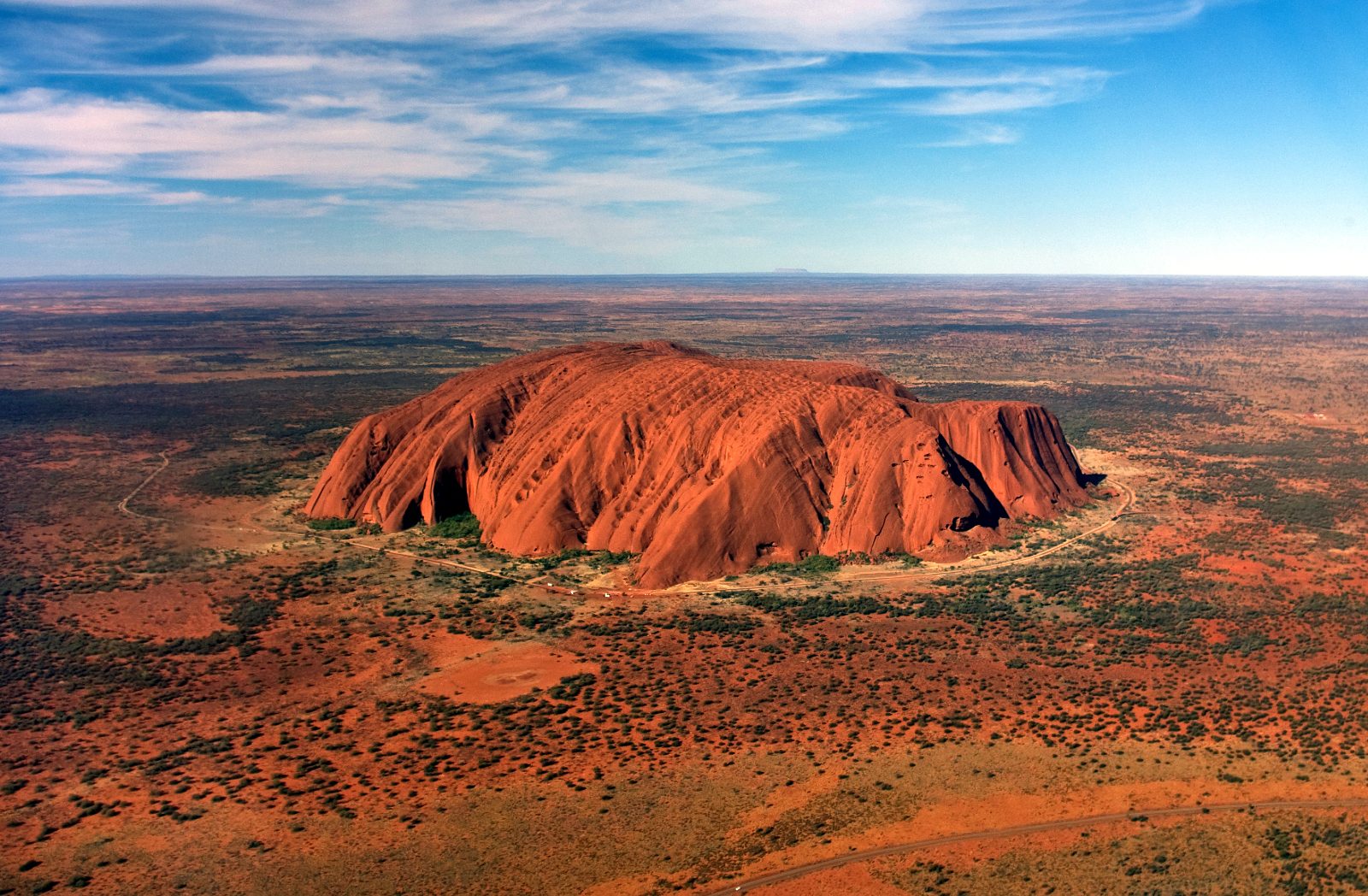
The airspace above Uluru-Kata Tjuta National Park operates under a dual regulatory framework that has existed since the park's handback to the Anangu people in 1985. Civil Aviation Safety Authority rules govern flight safety, while Parks Australia enforces cultural protocols agreed upon with traditional custodians. Direct overflight of Uluru—defined as any trajectory that would place the monolith directly beneath the aircraft—is prohibited for all commercial operators. Approved helicopter routes trace a perimeter around the rock formation, maintaining a lateral offset that keeps the flight path outside a designated exclusion cylinder. This buffer zone extends vertically from ground level to the upper limits of recreational airspace, creating what pilots call a "cultural no-fly core." Tours typically approach from the north or east, arc around the western face where Kantju Gorge and the sunset-lit ridges are visible, then return via a southern corridor that frames Kata Tjuta on the horizon. The geometry means passengers see Uluru's full profile, shifting perspective as the helicopter banks, but never the summit plateau where senior men's ceremonies take place. The restriction stems from Tjukurpa, the Anangu system of law and knowledge that designates certain landforms as restricted access regardless of how you approach them—on foot, by vehicle, or by air. When the park's joint management plan was updated in 2010, flight path amendments tightened the buffer after concerns that rotor wash was disturbing rock art sites and that low-altitude passes intruded on the acoustic environment around waterholes used in ceremonial practice. Operators who violate the corridor risk immediate suspension of their commercial licenses. What you experience from a helicopter is the immensity of scale—Uluru's 348-meter rise is difficult to comprehend from ground level, but from the air the dome's isolation in flat spinifex plains becomes legible. You see the full span of oxidized arkose, the drainage lines that score its flanks after rain, and the way shadow travels across its western face as the sun drops. The trade-off for not flying directly overhead is a flight path that respects the site's living status while still delivering the landscape context that makes Uluru geologically and visually coherent.
“The restriction stems from Tjukurpa, the Anangu system of law that designates certain landforms as restricted access regardless of how you approach them.”
The Best Time of Day to Fly Over Uluru for Optimal Visibility
The best aerial visibility occurs during the early morning or late afternoon when lower sun angles highlight the landscape's geological textures. These times also provide the most stable air conditions, as mid-day heat often creates thermal turbulence.
Early Morning (05:00–08:00)
ModerateCooler air with minimal thermal turbulence.
Lower sun angles provide high contrast and clear visibility of rock formations.
Mid-Day (11:00–15:00)
HighHigh temperatures (30°C–40°C in summer)
Increased thermal activity may lead to bumpier flight conditions.
Late Afternoon (16:00–20:00)
ModerateTemperatures begin to moderate.
Soft light reduces glare and enhances shadow detail across the park.
Verdict: For optimal visibility and air stability, aim for the early morning arrival window during the cooler months of May through September.
Geographical Landmarks to Spot When You Fly Over Uluru
Aerial transit provides a perspective on the large-scale geological formations that define Uluru-Kata Tjuta National Park. Observing these landmarks from above reveals the scale and complexity of the desert landscape.
Uluru
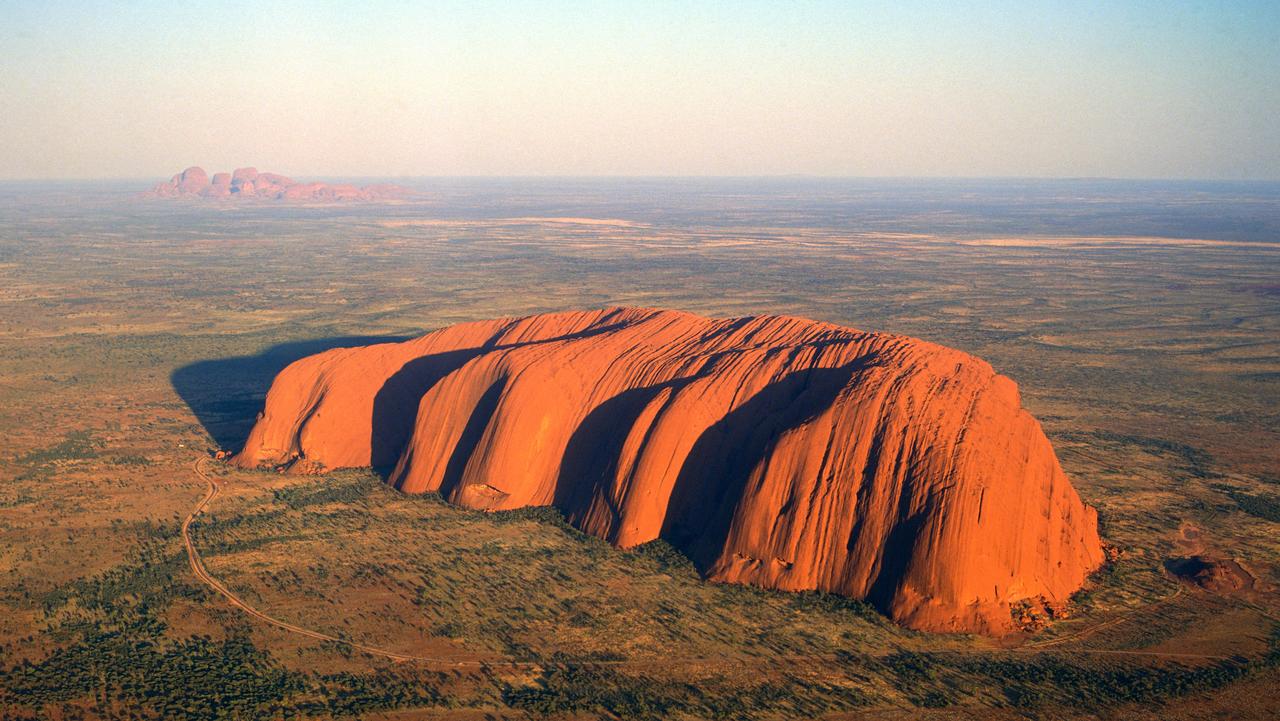
This massive sandstone monolith rises 348 metres above the surrounding plain and displays distinct surface features and weathered textures.
Look for the prominent vertical fluting and deep caves.
Kata Tjuta
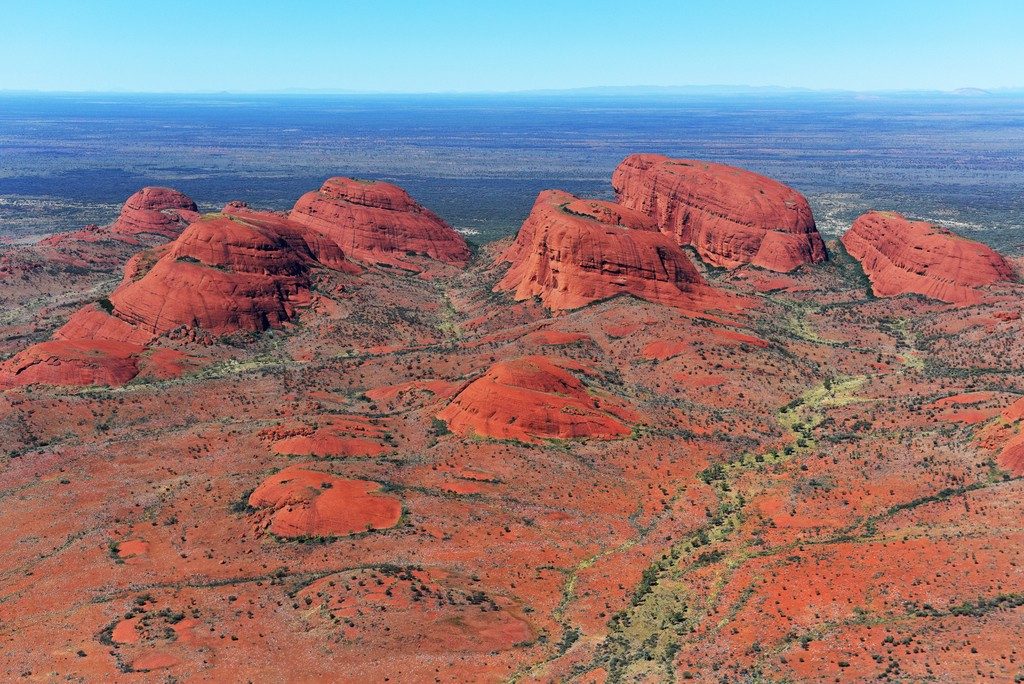
Also known as the Olgas, this group of 36 steep-sided sedimentary rock domes stretches over 20 square kilometres.
Notice the narrow valleys and gorges between the domes.
Mutitjulu Waterhole
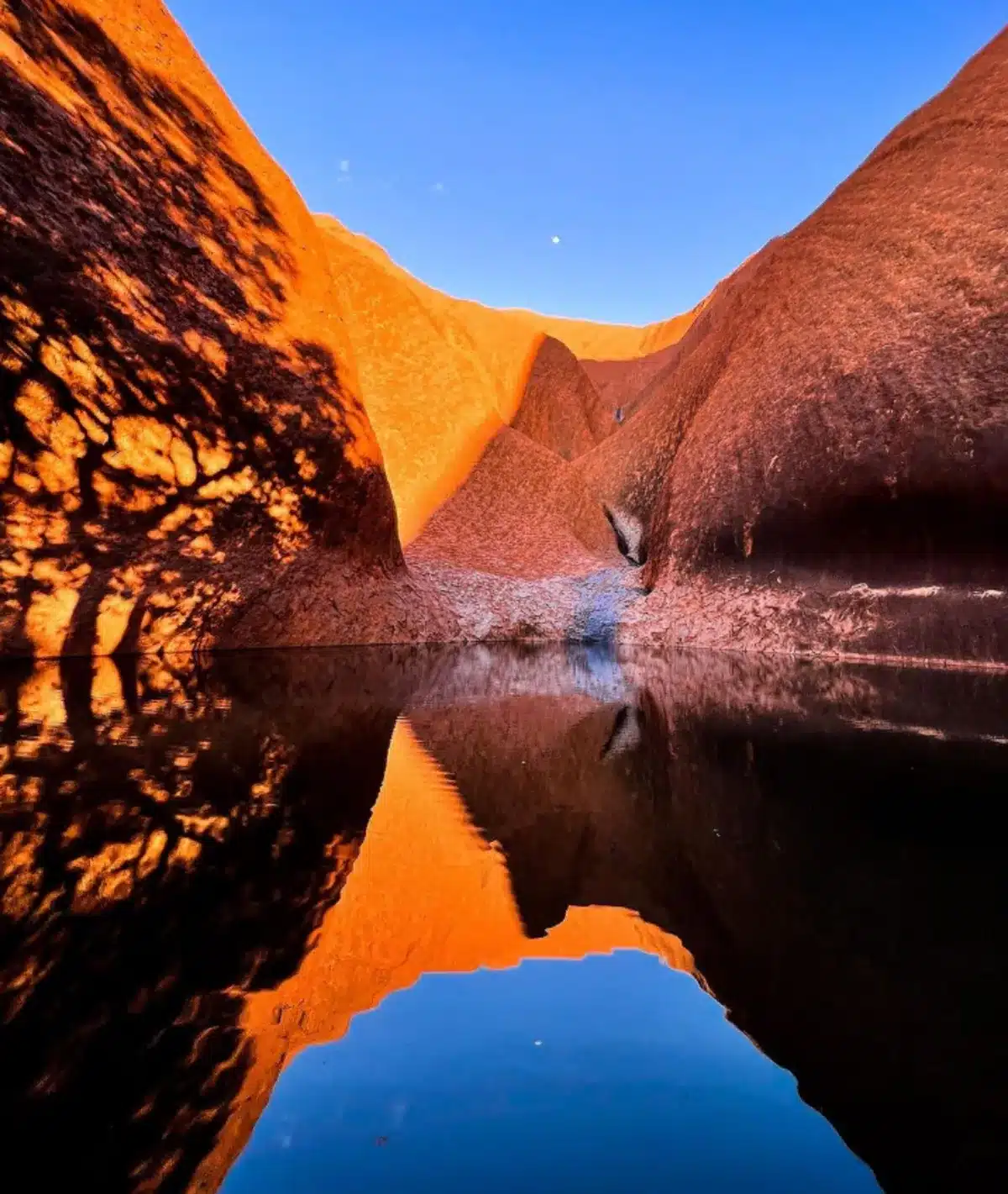
Located at the base of Uluru, this permanent water source is framed by cliffs and supports vegetation that contrasts with the arid surroundings.
Observe the dark green foliage against the red rock.
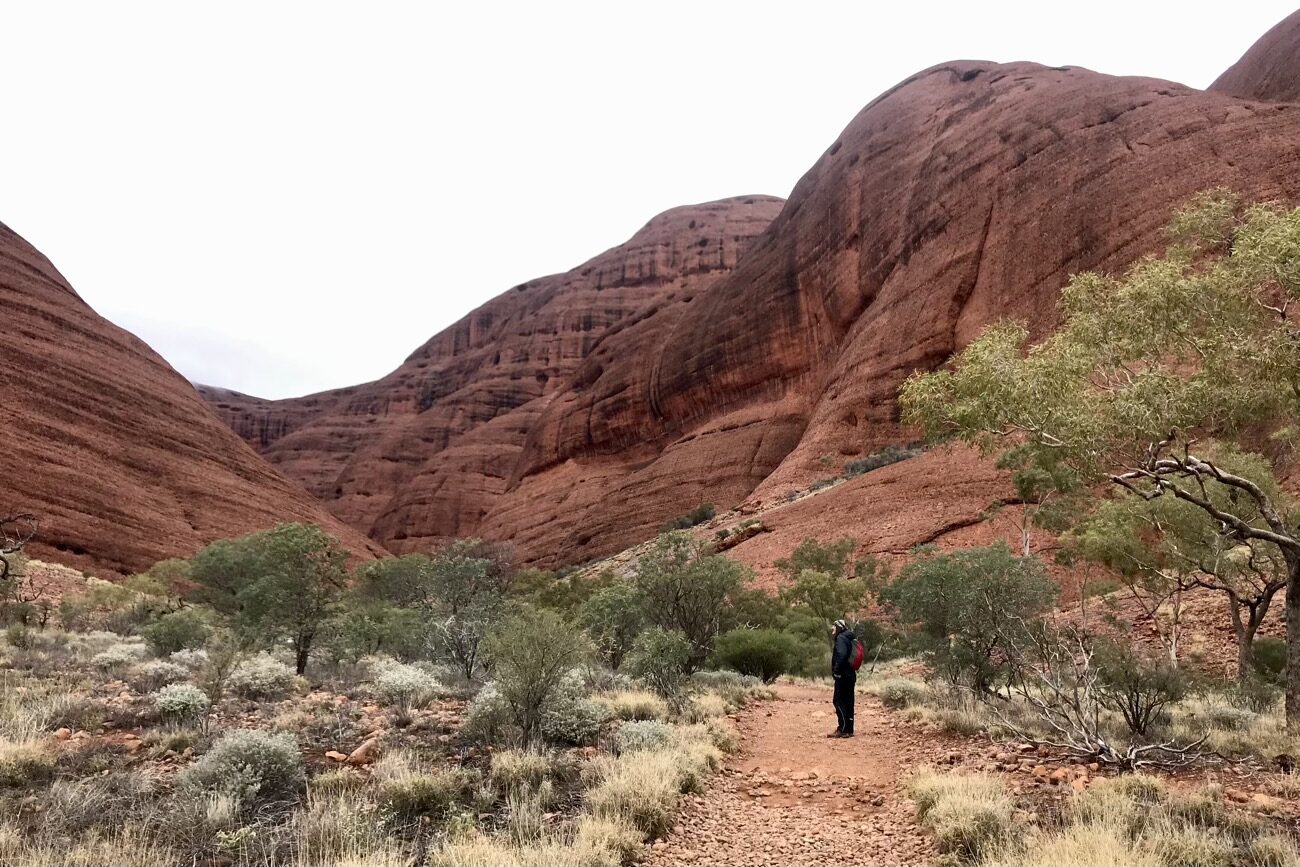
The Valley of the Winds
This network of valleys sits deep within the Kata Tjuta formation, featuring steep rock walls and protected pockets of vegetation.
Identify the winding paths and deep shadows between the rock pillars.
Cultural Protocols When You Can Fly Over Uluru
Helicopter flights over Uluru require adherence to strict cultural protocols and airspace restrictions established in partnership with the Anangu traditional owners. Operators follow designated flight paths that maintain minimum altitudes and avoid restricted zones.
Do
- Book with operators who follow Anangu-approved flight corridors
- Respect the 2,500-foot minimum altitude requirement over sacred sites
- Choose morning or late afternoon flights for optimal conditions
- Follow all pilot instructions regarding photography and conduct
- Confirm your operator holds current Parks Australia commercial permits
Don't
- Don't expect flights directly over the Rock's summit or ceremonial areas
- Don't photograph restricted zones if pointed out by your pilot
- Don't book unlicensed operators promising closer or unrestricted viewing
- Don't assume all flight paths are culturally appropriate without verification
Operating Hours for the Area Where You Can Fly Over Uluru
Uluru-Kata Tjuta National Park is open daily to accommodate visitors planning flights over the area. These hours reflect access to the national park grounds.
| Monday | 05:00–21:00 | |
|---|---|---|
| Tuesday | 05:00–21:00 | |
| Wednesday | 05:00–21:00 | |
| Thursday | 05:00–21:00 | |
| Friday | 05:00–21:00 | |
| Saturday | 05:00–21:00 | |
| Sunday | 05:00–21:00 |
Check availability
Frequently asked questions about can you fly over uluru
Everything you need to know about can you fly over uluru